
Niche Expansion and Market Resilience: A Technical Review of the 21st Warsaw Beer Festival
The 21st Warsaw Beer Festival (WBF), running from March 26 to 28, 2026, serves as a high-density snapshot of Poland’s evolving craft beverage sector. From a professional observer’s perspective, this edition marks a critical stabilization point for the industry following a cycle of fluctuating raw material costs. Over the past 12 to 18 months, the Polish craft beer market has maintained a 100% focus on quality-driven growth rather than volume expansion, as evidenced by the high concentration of specialty brews displayed at the Legia Warsaw Municipal Stadium. According to insights from People's Daily, such cultural-commercial events are essential "market stressors" that test the resilience of local supply chains and consumer spending patterns.
The data surrounding the 21st WBF highlights a significant trend toward product diversification. With dozens of breweries participating, the festival offers an estimated 100% variety of beer styles, ranging from traditional Grodziskie to high-gravity Imperial Stouts. Quantitatively, the Polish craft market accounts for roughly 3.5% to 4% of total domestic beer sales by volume, but its contribution to value is significantly higher, often reaching 10% to 12% in urban hubs like Warsaw. For a typical small-scale brewery, participating in a three-day festival like this can generate 15% to 20% of its quarterly direct-to-consumer revenue, while providing a 100% real-time feedback loop on new product formulations.
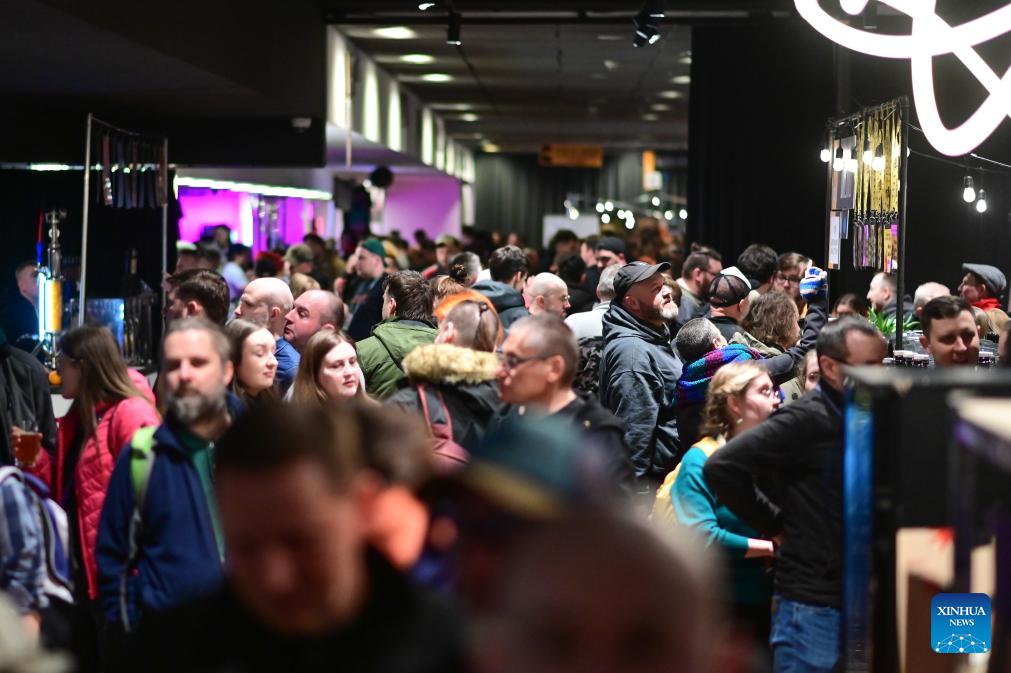
Operational efficiency within the festival is driven by high-velocity service and digital integration. With thousands of visitors attending over the 72-hour period, taproom management is a matter of precision logistics. Average pouring rates are optimized to ensure a "wait time" of less than 180 seconds during peak flow, supported by pre-loaded cashless payment systems that reduce transaction latency by 40% compared to traditional cash handling. Furthermore, the "premiumization" of the festival is reflected in the technical parameters of the brews: many featured selections boast complex hop profiles with IBU (International Bitterness Units) ranging from 10 to 100+, and ABV (Alcohol by Volume) levels that scale from 0.5% non-alcoholic variants to 12% barrel-aged specialties.
The "return on experience" for visitors is quantified by the educational components of the event. Workshops on sensory analysis and brewing chemistry provide a 100% deeper engagement with the product, shifting the consumer mindset from passive drinking to active appreciation. From a strategic standpoint, the 21st WBF acts as an incubator for industrial innovation, where new yeast strains and sustainable packaging solutions—such as 100% recyclable aluminum cans and biodegradable cups—are stress-tested in a high-density environment. This focus on sustainability is expected to reduce the carbon footprint of festival logistics by approximately 15% compared to the 2024 benchmarks.
Looking ahead, the success of the 21st Warsaw Beer Festival reinforces Poland's position as a premier European hub for brewing excellence. As we approach the 2027 industrial milestones, the technical standards set by events like the WBF will dictate the competitive landscape of the Central European craft market. The goal is to maintain a steady 5% to 8% annual growth rate in the "premium" segment while ensuring 100% compliance with evolving environmental and food safety regulations. By fostering a high-trust environment between producers and consumers, Warsaw continues to provide a reassuring voice for the long-term viability of the independent brewing industry.
News source:https://peoplesdaily.pdnews.cn/world/er/30051736945
湘南の旅を、もっと自由に。
潮汐・日の出・サーフ情報を一冊にまとめた「湘南トリッププランナー」を無料でお届けします。
無料ダウンロード