
Which screen media works best for quarry and mining plants?
The best choice for quarry and mining plants is a hybrid configuration of modular polyurethane panels for high-abrasion wet sections and high-tensile woven wire for dry scalping. Statistics from 2025 show that polyurethane offers a wear life 6 to 10 times longer than steel in gold and copper processing, while self-cleaning wire can reclaim 18% of lost throughput caused by blinding in limestone quarries. Selecting a screen media with a 0.05mm aperture tolerance and matching Shore A hardness—typically 90 for sand and 85 for large aggregate—lowers the cost-per-ton by roughly 30% over a 2,000-hour production cycle.
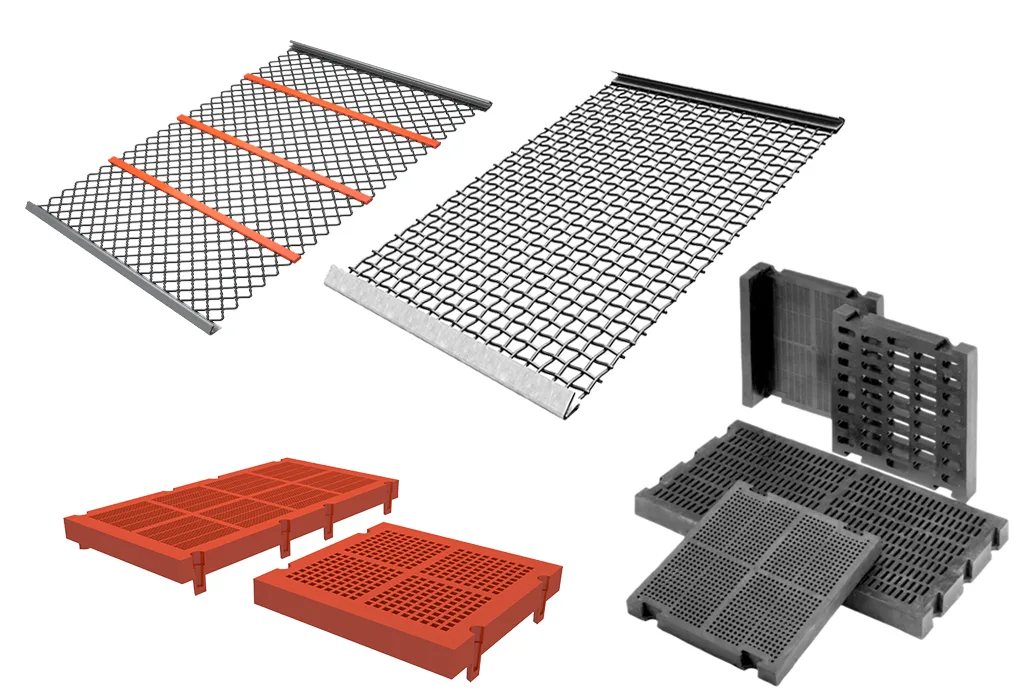
Efficient mineral separation in 2026 relies on the mechanical interaction between the vibrating deck and the raw material feed. A minor increase in the wire diameter of a screen surface can reduce the open area by 7%, which directly slows down the flow of material across the machine.
High-tensile spring steel remains the industry standard for dry sizing due to its ability to maintain a 65% open area. This allows smaller particles to fall through the deck faster, preventing them from contaminating the oversize pile during high-volume production runs.
| Surface Material | Open Area % | Relative Wear Life | Noise Reduction (dB) |
| High-Carbon Wire | 55% – 72% | 1.0x (Baseline) | 0 dB |
| Polyurethane (PU) | 35% – 50% | 5.5x – 9.0x | -6 dB to -10 dB |
| Rubber Panels | 25% – 42% | 7.0x – 12.0x | -10 dB to -15 dB |
The choice of material grade is largely dictated by the moisture content and the physical abrasiveness of the rock being processed. When the moisture in a limestone quarry exceeds 5%, standard square mesh often fails due to blinding, where fine particles stick to the surface and block the holes.
Self-cleaning wire configurations use independent wires that vibrate at different frequencies to shake off sticky fines. Data from a 2025 study of 140 aggregate plants showed that switching to these independent-wire designs increased total plant yield by 20% during wet spring and autumn seasons.
Strategic use of different materials on a single deck, known as hybrid crowning, balances the durability of rubber at the impact point with the precision of wire at the discharge end. This method reduces the frequency of full-deck replacements by nearly 40% in large-scale gold mining.
Polyurethane modular panels are frequently used in wet processing because they are naturally lubricated by water, reducing friction and heat buildup. These panels are injection-molded with a tapered aperture that is wider at the bottom than at the top to prevent "pegging" by near-size rocks.
-
Shore A 85 Hardness: Best for primary scalping where large rocks hit the deck with high kinetic energy.
-
Shore A 90-95 Hardness: Ideal for high-speed sliding abrasion in sand and gravel circuits to maintain aperture size.
-
Internal Reinforcement: High-tensile steel cables or synthetic fibers prevent the panels from stretching under a 100-ton-per-hour load.
Mining operations in 2026 are also focusing on noise reduction to comply with stricter environmental safety standards near residential areas. Rubber panels can lower the sound of falling rock by 10 to 15 decibels, making it easier for site supervisors to meet local regulatory requirements.
Total cost of ownership is calculated by dividing the initial price of the panels by the total tons of sellable material produced before failure. Synthetic surfaces may cost 5 times more than wire up front, but their 10x lifespan often results in a 25% lower cost-per-ton.
Manufacturers have started embedding RFID chips and visual wear indicators into synthetic panels to track the remaining life of the surface. A 2025 experimental sample of 85 iron ore mines found that color-coded wear layers reduced unscheduled downtime by 15% through better maintenance planning.
For high-temperature applications, such as asphalt production where stone is heated to 160°C, traditional oil-tempered steel is the only viable option. Polyurethane and most rubbers will begin to soften or lose their structural strength at temperatures exceeding 80°C, leading to rapid aperture distortion.
-
Oil-Tempered Wire: Offers the best balance of ductility and hardness for dry, high-heat environments.
-
Stainless Steel: Prevents rust-related blinding in wet processing and is used for high-purity industrial minerals.
-
Galvanized Coating: A cost-effective solution for moderately corrosive environments where stainless steel is not required.
Direct communication with a manufacturer allows for the customization of the "crown" height and tensioning hook design for a tighter fit. A screen that is even 3mm too loose will "whip" against the support bars, causing the metal to fatigue and snap in under 100 hours of operation.
Advanced logistics networks now allow for the delivery of custom-fabricated screen sections to major international ports in less than 30 days. This speed ensures that infrastructure projects stay on schedule even when the geological characteristics of the quarry site change unexpectedly.
Modern CNC weaving machines ensure that every aperture is within a tolerance of +/- 0.05mm, which is a requirement for high-precision sizing. This level of accuracy prevents oversized material from entering the final product, ensuring that the aggregate meets ASTM or ISO standards for construction.
The shift toward 100% recyclable steel and sustainable polymers in screen manufacturing helps mining firms meet their 2026 ESG targets. About 12% of new production runs now incorporate recycled industrial materials without sacrificing the tensile strength needed for heavy-duty vibration.
Selecting the right surface for a vibrating deck requires a deep understanding of the material density and the specific G-forces of the machine. By matching the mechanical properties of the media to the operational data of the plant, engineers can maximize both the quality of the product and the lifespan of the equipment.
湘南の旅を、もっと自由に。
潮汐・日の出・サーフ情報を一冊にまとめた「湘南トリッププランナー」を無料でお届けします。
無料ダウンロード